
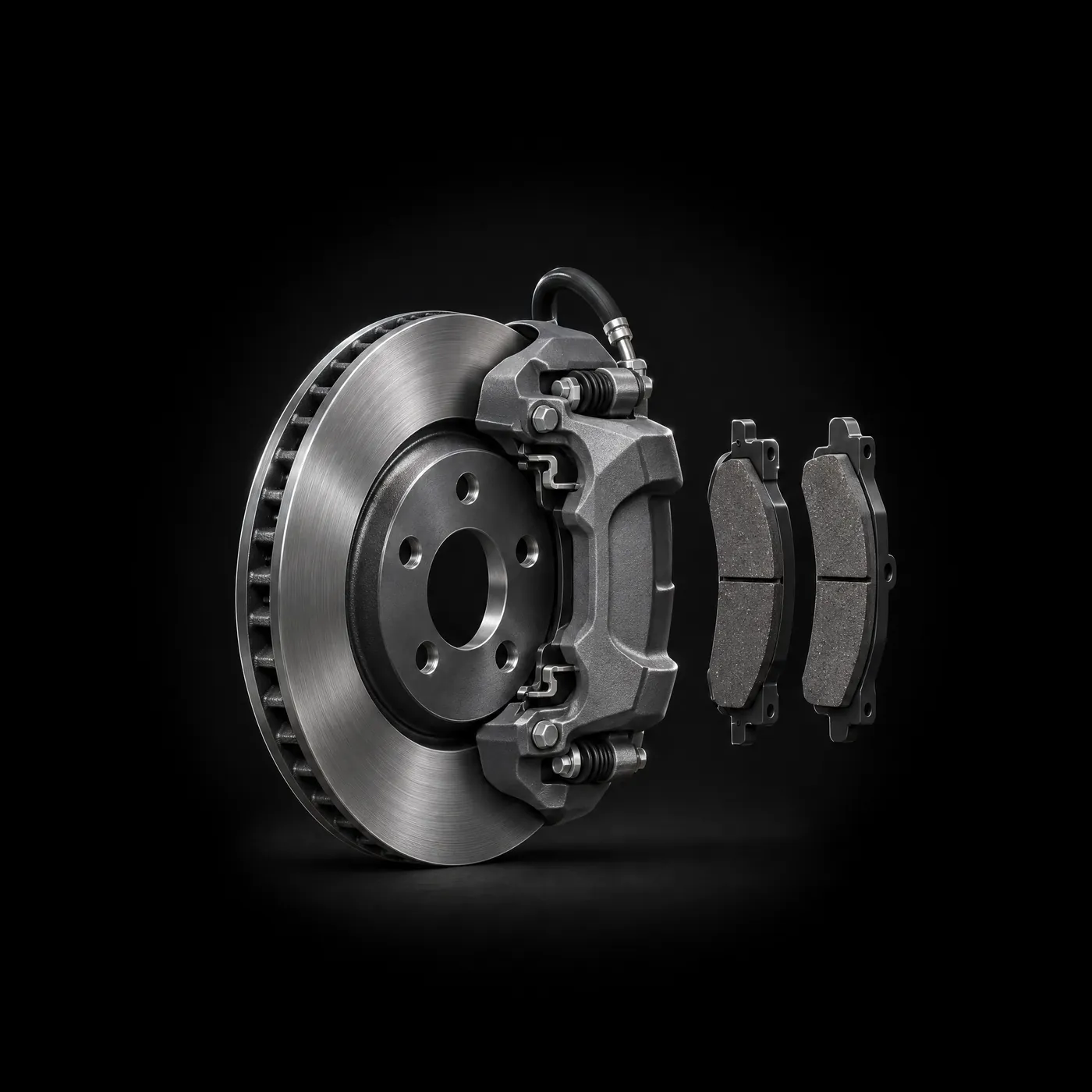
- Brake disc
- Calliper
- Brake pads
How it works
Brakes wear every time you use them. The pads wear down against the discs, or the shoes against the drums, and the discs get thinner. Brake fluid absorbs water over time, which lowers its boiling point and can make the pedal go soft under hard braking.
Pads and discs have a minimum thickness set by the maker, and once they reach it they have to be replaced.
Signs to look out for
- Squealing or grinding when you brake
- The vehicle pulls to one side under braking
- A vibration through the pedal or the steering wheel
- A soft or sinking brake pedal
- The brake warning light is on
- It takes longer to stop than it used to
What the job involves
- We measure the pads and discs and check the callipers, hoses and brake fluid.
- We replace worn pads and discs in pairs across the axle, so the vehicle brakes evenly and stops straight.
- We bleed in fresh fluid where needed, then road-test the brakes.
Book a service
We work on cars, buses, trucks, tractors and forklifts.
Prototype: this form shows the layout only and does not send anything.