
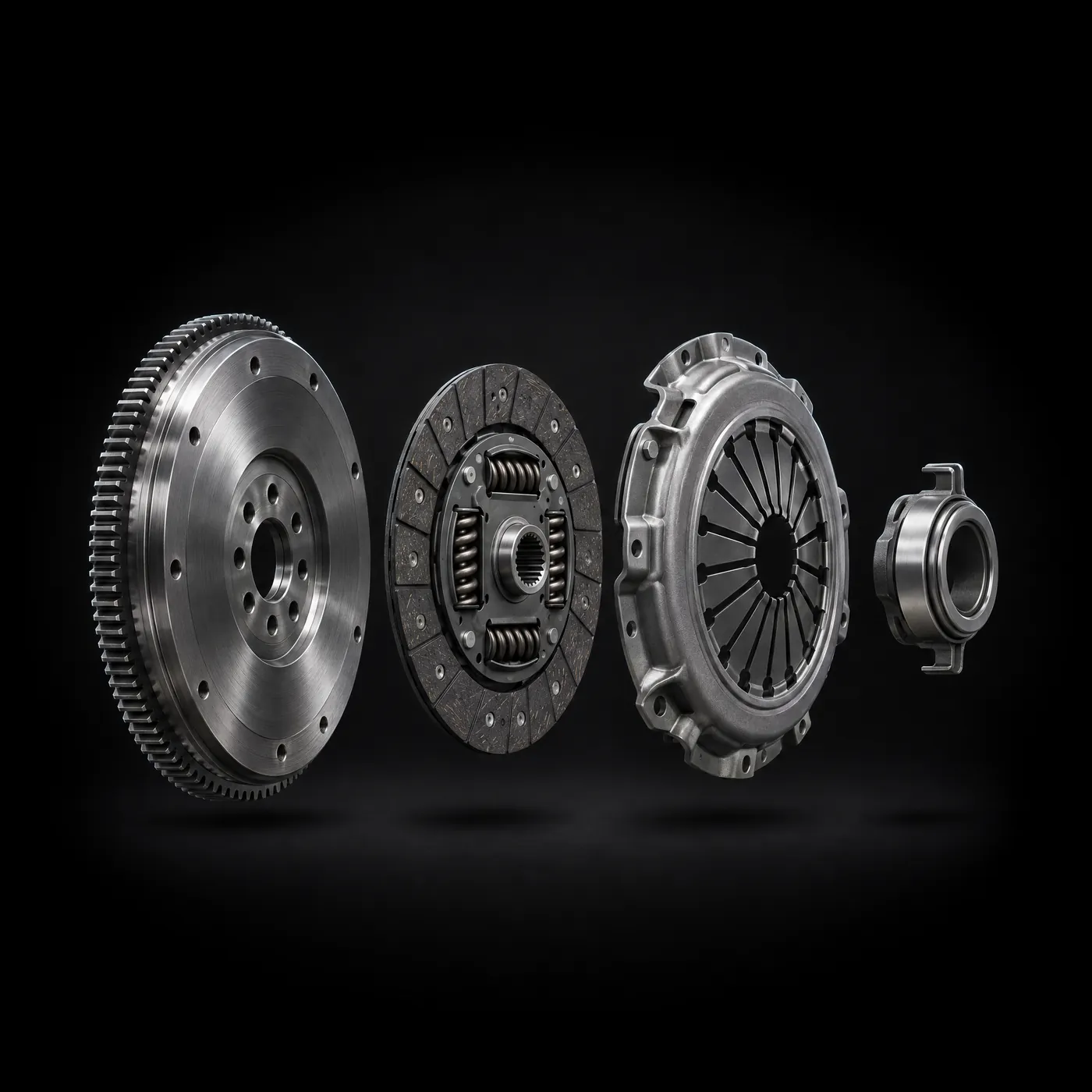
- Flywheel
- Friction plate
- Pressure plate
- Release bearing
How it works
The clutch connects the engine to the gearbox. Its friction plate wears a little every time you pull away, and once it is worn thin the clutch starts to slip.
To reach the clutch, the gearbox has to come out, so the clutch is usually replaced as a kit: the pressure plate, the friction plate and the release bearing. The flywheel is checked while it's exposed, and a dual-mass flywheel is often replaced along with the clutch.
Signs to look out for
- The revs rise but the vehicle doesn't pick up speed, especially uphill or with a load
- A judder as you pull away
- The clutch only bites near the top of the pedal
- The pedal feels heavy or soft, or it sticks
- Gears are hard to select, or they grind
- A burning smell after a hill start or heavy towing
What the job involves
- We confirm the clutch is at fault. Worn hydraulics or a gearbox problem can feel much the same.
- We take out the gearbox and fit the new clutch kit.
- We refit the gearbox, adjust or bleed the clutch where needed, and road-test the vehicle.
Book a service
We work on cars, buses, trucks, tractors and forklifts.
Prototype: this form shows the layout only and does not send anything.