
Replacement of timing belts/chains
Timing belts and chains replaced before they wear out and fail.
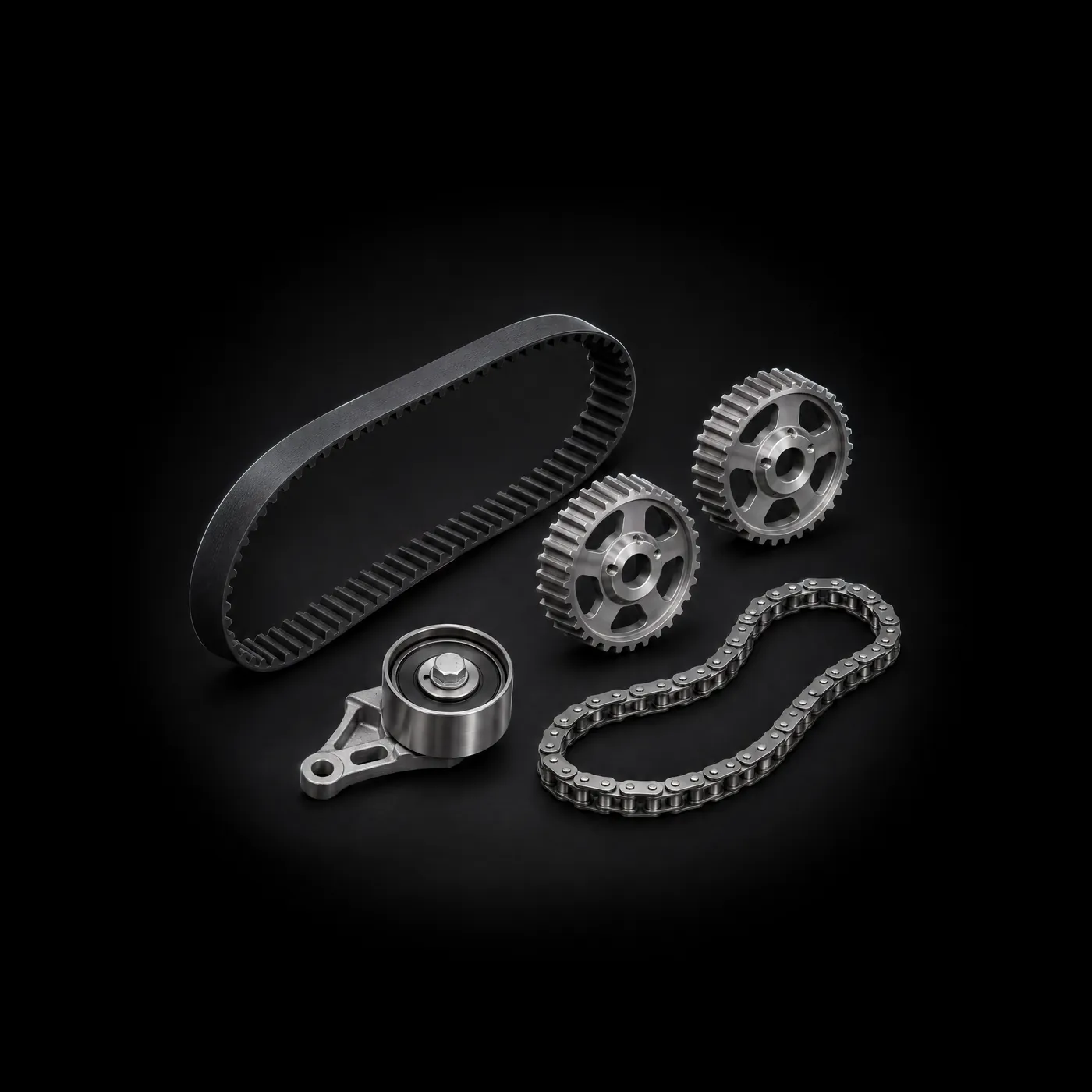
- Timing belt
- Cam pulleys
- Tensioner
- Timing chain
How it works
The timing belt or chain links the crankshaft to the camshafts, so the valves open and close in time with the pistons.
A belt wears with age as well as kilometres, and every engine has a replacement interval set by its maker. A chain lasts longer, but it stretches, and its guides and tensioners wear. In many engines, if the belt snaps, the pistons hit the valves and the engine is badly damaged.
When it's due
- The vehicle has reached the belt interval in its service book
- Nobody knows when the belt was last changed, which is common with a vehicle bought second-hand
- A rattle from the front of the engine on a cold start, which can mean a stretched chain or a worn tensioner
- A whine, squeal or ticking from behind the timing cover
- Oil or coolant leaking near the timing cover
What the job involves
- We replace the belt or chain together with the parts that wear alongside it: the tensioner, the idler pulleys and the guides.
- Where the belt drives the water pump, the pump is normally replaced at the same time.
- We set the timing to the maker's marks and turn the engine over by hand to check it before the first start.
Book a service
We work on cars, buses, trucks, tractors and forklifts.
Prototype: this form shows the layout only and does not send anything.